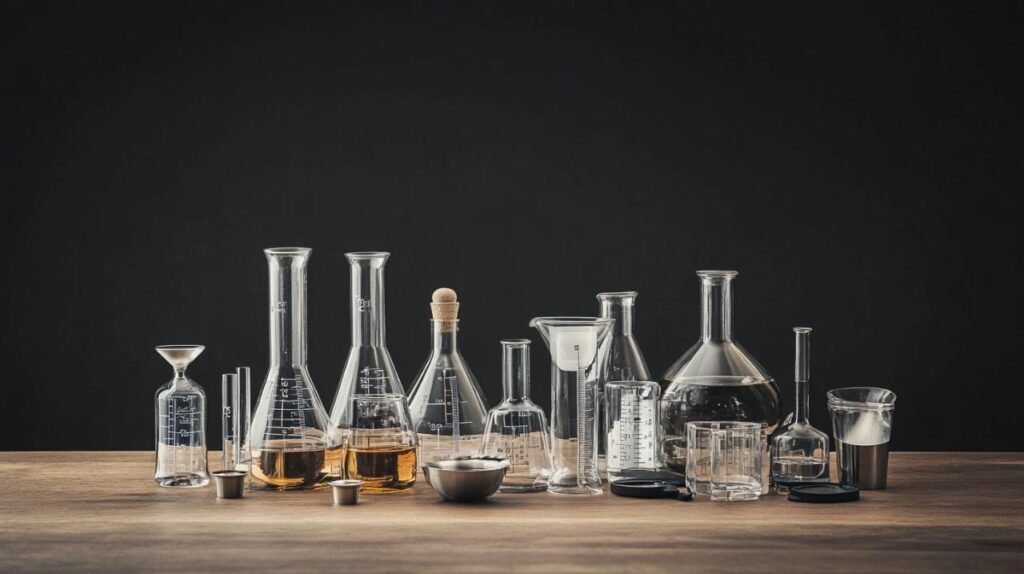
Whether in a bustling kitchen or a meticulously organised laboratory, understanding the nuances of liquid measurement is essential for achieving precise results. The ability to convert between various units of volume, from millilitres to litres, ensures that recipes turn out as intended and scientific experiments yield reliable data. This guide explores the different types of litre measuring tables and the practical tools that support accurate measurement across diverse settings.
Understanding litre measuring tables and their practical applications
What are litre measuring tables and why they matter
Litre measuring tables serve as invaluable references for converting and understanding liquid measurement units. These tables provide a structured overview of how different volume units relate to one another, making it easier to navigate the complexities of the metric system and other measurement standards. Liquid measurement refers to the volume of liquid measured in standard units, and it is commonly applied when dealing with everyday substances such as water, milk, or oil. In both domestic and professional environments, these tables eliminate guesswork and facilitate precise conversions, whether one is scaling a recipe or preparing a chemical solution.
The importance of such tables cannot be overstated. In culinary settings, even a slight miscalculation can alter the texture or flavour of a dish, while in laboratory work, accuracy is paramount for ensuring the validity of experimental outcomes. By offering a clear framework for understanding how millilitres, centilitres, decilitres, and litres interrelate, these tables empower users to work with confidence. They also bridge the gap between different measurement systems, such as the metric system and US Customary Units or UK Imperial Units, thereby supporting a global exchange of recipes, scientific protocols, and industrial standards.
The Role of Measuring Tables in Laboratory and Culinary Settings
In kitchens around the world, measuring pitchers and cups are indispensable tools for portioning ingredients with precision. These implements often feature markings that correspond to common volume units, allowing cooks to measure liquids quickly and accurately. However, when recipes call for conversions or when working with international standards, a litre measuring table becomes an essential companion. It enables seamless transitions between units such as tablespoons, cups, pints, quarts, and gallons, ensuring that every dish is prepared to perfection.
Laboratories, on the other hand, rely on specialised equipment such as beakers and graduated cylinders to measure liquids with scientific rigour. These instruments are designed to provide highly accurate readings, often down to the millilitre or even smaller increments. In such settings, litre measuring tables complement the precision of laboratory glassware by offering a quick reference for converting between metric units and other measurement systems. For instance, understanding that one fluid ounce equals approximately 28.573 millilitres in the US Customary system or 28.413 millilitres in the UK Imperial system can be crucial when interpreting international research or adapting protocols from different regions. This dual utility in both culinary and laboratory contexts underscores the versatility and necessity of well-structured measuring tables.
Navigating the Metric System: From Millilitres to Litres
Breaking down common volume units: millilitres, centilitres, decilitres, and litres
The metric system offers a logical and straightforward approach to liquid measurement, with units that scale by factors of ten. At the foundation of this system is the litre, a unit that serves as the benchmark for measuring larger volumes. One litre is equivalent to 1,000 millilitres, making it a convenient reference point for both everyday and scientific applications. Millilitres, in turn, are often the preferred unit for smaller quantities, particularly in recipes or when precise dosing is required in a laboratory setting.
Intermediate units such as centilitres and decilitres also play important roles in this hierarchy. One centilitre equals ten millilitres, while one decilitre is equivalent to 100 millilitres. Although these units are less commonly used in some regions, they remain integral to the metric system and are frequently encountered in European recipes and scientific literature. Understanding these relationships allows for seamless conversions and ensures that measurements are both accurate and contextually appropriate. For example, converting 250 millilitres to a quarter of a litre or 2.5 decilitres becomes a simple arithmetic exercise when one is familiar with the metric framework.

Mastering cubic measurements for accurate liquid calculations
Cubic measurements offer another dimension to understanding liquid volume, particularly when dealing with containers and storage. In the metric system, one cubic centimetre is equivalent to one millilitre, a correspondence that simplifies calculations involving three-dimensional space. This relationship is especially useful in laboratory settings, where the volume of a liquid in a container can be determined by measuring its dimensions and calculating the cubic capacity.
When working with larger volumes, cubic measurements can also be expressed in litres. For instance, one cubic decimetre is equal to one litre, providing a direct link between spatial dimensions and liquid capacity. This connection is not only theoretical but also practical, as it enables professionals to estimate the volume of liquids in tanks, vessels, and other receptacles. By mastering these cubic relationships, users can enhance their ability to perform accurate liquid calculations and ensure that their measurements align with the demands of both culinary and laboratory work. The integration of cubic measurements into litre measuring tables further enriches these tools, offering a comprehensive resource for diverse measurement needs.
Practical Tools and Techniques for Achieving Measurement Precision
Utilising measuring spoons, cups, and conversion charts effectively
Precision in measurement begins with the selection of appropriate tools. Measuring spoons and cups are staples in kitchens, designed to portion out liquids and dry ingredients with consistency. These implements typically feature standardised markings, such as tablespoons, teaspoons, and cup fractions, which correspond to established volume units. In the metric system, one tablespoon is approximately 14.78677 millilitres, while one cup equals about 236.58824 millilitres. Such precise conversions are essential when adapting recipes from different culinary traditions or scaling quantities up or down.
Conversion charts serve as invaluable aids in this process, offering quick reference points for translating between units. For example, understanding that one gallon equals 3.7854 litres or that 100 quarts is equivalent to 25 gallons can streamline meal preparation and ingredient sourcing. In laboratory settings, similar charts facilitate the accurate preparation of solutions and reagents, where even minor discrepancies can compromise experimental integrity. By combining the use of reliable measuring tools with well-constructed conversion charts, users can achieve a high degree of accuracy and confidence in their work.
Ensuring Accuracy in Recipes and Laboratory Work Through Proper Measurement
The pursuit of precision in measurement is not merely a technical exercise but a cornerstone of successful outcomes, whether in the kitchen or the laboratory. In culinary applications, accurate measurement ensures that recipes are reproducible and that flavours, textures, and presentations meet expectations. A slight deviation in the quantity of a key ingredient, such as water or oil, can significantly alter the final product, underscoring the importance of meticulous attention to detail.
In scientific research, the stakes are even higher. Accurate liquid measurement is fundamental to the validity of experiments, the reliability of data, and the safety of procedures. Graduated cylinders, beakers, and other specialised instruments are calibrated to exacting standards, and their proper use is essential for maintaining the integrity of scientific work. By adhering to best practices in measurement, including the use of litre measuring tables and conversion charts, researchers can minimise errors and enhance the reproducibility of their findings. Ultimately, the commitment to precision in measurement transcends individual tasks, contributing to a culture of excellence and reliability in both professional and personal endeavours.