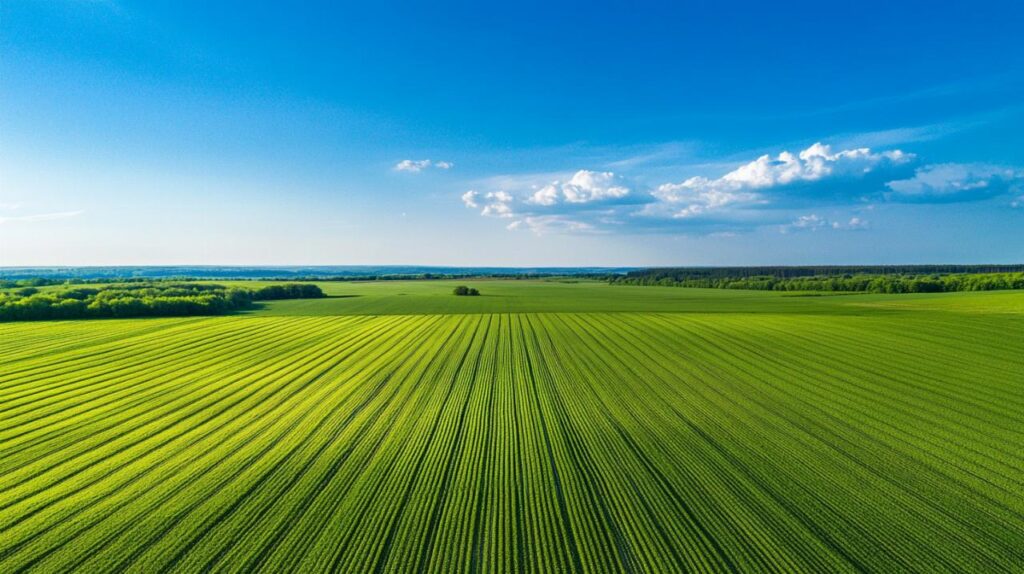
For anyone involved in agriculture or land management across the United Kingdom, understanding the measurement of hectares and their relationship to metres is essential. Whether planning grazing rotations, assessing field sizes, or budgeting for infrastructure, the ability to convert between these units and apply them practically to British farmland is a skill that underpins effective farm management. This guide will take you through the fundamental concepts and practical applications, ensuring you can confidently navigate land measurement and livestock management on your property.
Understanding the hectare: britain's standard land measurement
What Exactly Is a Hectare and Why Do British Farmers Use It?
The hectare is the standard unit for measuring agricultural land and large properties throughout the United Kingdom, having been officially adopted when the metric system came into force in 1965. A hectare, abbreviated as ha, represents an area of ten thousand square metres. This makes it a convenient and practical measurement for farmland, estates, and conservation areas. British farmers have embraced the hectare because it simplifies calculations and communication, particularly when dealing with large tracts of land. For instance, farms across the North East of England average around one hundred and thirty-eight hectares, whilst those in the West Midlands tend to be smaller at approximately sixty-six hectares, with the English average sitting at eighty-seven hectares. This widespread adoption means that whether you are purchasing land, planning crop rotations, or managing grazing, the hectare is the measurement you will encounter most frequently.
Visualising a Hectare: Real-World Comparisons for Perspective
Grasping the size of a hectare can be challenging without tangible comparisons. To put it into perspective, a standard football pitch covers roughly seven-tenths of a hectare, whilst the iconic Trafalgar Square in London measures about one hectare. An international rugby pitch comes remarkably close to one hectare as well. If you prefer to think in terms of everyday spaces, a single hectare could accommodate around forty tennis courts or between fifty and sixty-five typical British gardens, given that the average garden spans one hundred and fifty to two hundred square metres. Standard allotment plots, which are two hundred and fifty square metres each, would require forty plots to fill one hectare. These comparisons make it easier to visualise the scale of land you might be working with on a farm or estate.
Converting between hectares and metres: the maths made simple
Square metres to hectares: essential conversion formulas
Converting between square metres and hectares is straightforward once you understand the basic relationship. Since one hectare equals ten thousand square metres, converting from square metres to hectares simply involves dividing the area in square metres by ten thousand. Conversely, to convert hectares to square metres, you multiply the number of hectares by ten thousand. These formulas are fundamental for anyone working with land measurement, whether you are calculating the size of a paddock, assessing grazing area, or planning property development. The simplicity of the conversion makes it accessible, even for those who are not mathematically inclined, and ensures consistency across the agricultural and property sectors.
Practical examples: working out field sizes in both units
Applying these conversion formulas to real-world scenarios helps solidify understanding. For example, if a field measures twenty-five thousand square metres, dividing by ten thousand reveals that it is two and a half hectares. Similarly, a property listed at three and a half hectares translates to thirty-five thousand square metres when multiplied by ten thousand. Even smaller areas can be converted easily, such as a plot of seven hundred and fifty square metres, which equals seventy-five thousandths of a hectare. These conversions are particularly useful when comparing land prices or planning infrastructure. In the UK, arable land typically fetches between twenty thousand and thirty thousand pounds per hectare, whilst pasture land costs between ten thousand and fifteen thousand pounds per hectare. Being able to switch between square metres and hectares allows you to make informed decisions and communicate effectively with agents, contractors, and fellow farmers.
Calculating Grazing Area Requirements for Livestock on British Farmland
Determining optimal stocking densities per hectare
Calculating the appropriate grazing area for livestock is a critical aspect of farm management, ensuring that animals receive adequate nutrition whilst maintaining pasture health. Stocking density, often expressed in terms of animals per hectare, depends on several factors including grass cover, growth rates, and the nutritional needs of the livestock. For instance, when planning rotational grazing for a dairy herd, a common approach is to allocate grazing based on dry matter availability. A two-hundred-cow herd grazing for twenty-four hours might require approximately five acres, or two hectares, per day if grass covers are around two thousand nine hundred kilograms of dry matter per hectare and the rotation length is twenty-one days. This calculation uses a rule of thumb of forty cows per one acre for every twenty-four hours of grazing. Accurate grass measurement is essential for these calculations, and methods such as the compressed sward stick, rising plate meter, and electronic sensors help assess pasture cover. A common conversion used in the UK is that one centimetre of compressed sward height equates to approximately one hundred and twenty-five kilograms of dry matter per hectare, plus six hundred and forty kilograms. By regularly measuring grass cover every seven to ten days during peak season, farmers can adjust grazing allocations and avoid overgrazing or underutilising pasture.
Seasonal variations and pasture management considerations
Seasonal variations significantly impact grazing management and the area required per animal. During winter, grass growth slows dramatically, and deferred grazing becomes necessary to maintain pasture quality and prevent poaching damage. Target grass covers for winter typically suggest turning animals onto covers of around three thousand two hundred and fifty kilograms of dry matter per hectare and grazing down to one thousand five hundred kilograms per hectare, aiming for a farm average of two thousand to two thousand five hundred kilograms per hectare before winter sets in. Winter grazing allocation for ewes, for example, must account for their stage of pregnancy and lactation. Dry ewes might require one and a half per cent of their body weight in dry matter, whilst late pregnancy ewes need two per cent. A feed budget for nine hundred and fifty mature ewes with a two hundred per cent scanning rate, assuming ten kilograms of dry matter per hectare per day grass growth, would detail grazing area, grazing days, and animal intakes for December, January, and February. During periods of snow or frost, supplementary feed such as silage or hay becomes necessary. For instance, a snow cover scenario lasting five days in mid-January might require six tonnes of fresh weight silage per day for nine hundred and fifty ewes. Additionally, the use of sacrifice fields helps prevent damage to better pasture during wet conditions. Effective pasture management also involves infrastructure planning, such as ensuring adequate water supply, with dairy cows needing eighty to one hundred and twenty litres per day, and designing paddock sizes and shapes to minimise damage. Long, thin paddocks should be avoided in favour of a two-to-one length-to-width ratio, or one-to-one on wetter fields. Proper fencing, track design, and gate placement further support efficient rotational grazing and protect pasture quality throughout the year.